Manufacturing
Why standard bill of materials fail on the factory floor: by-product and scrap costing
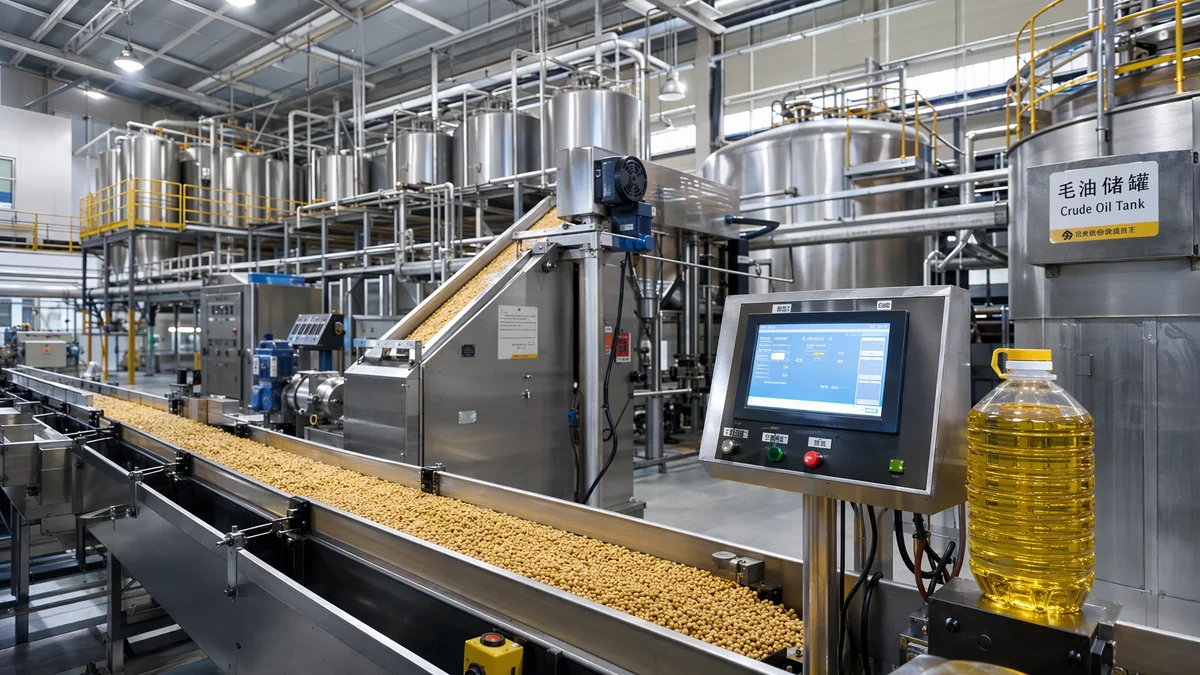
Why do standard static bills of materials fail to accurately cost production batches with variable by-products and scrap?
Standard static bills of materials assume fixed, one-directional conversion of raw materials into finished goods. In process and discrete manufacturing, batches routinely yield valuable secondary outputs (by-products, co-products, or recyclable scrap). If the software cannot credit the net realizable value of secondary outputs back against primary batch costs, the main product appears artificially overpriced while by-products appear at zero cost, distorting pricing decisions and gross margins.
Key takeaways
- A static one-to-one BOM cannot accurately cost process manufacturing operations that produce simultaneous co-products.
- Dynamic by-product costing reduces the net cost of the primary product by the market value of recovered secondary outputs.
- Unaccounted factory scrap distorts work-in-progress (WIP) valuation and masks operational machinery inefficiencies.
- Distinguishing between normal process shrinkage (unavoidable loss) and abnormal scrap (operator defect) is critical for tax compliance.
The business scenario: the edible oil refinery losing sales to 'cheaper' competitors
Consider Shreenath Oil & Agro Industries, a soybean processing and solvent extraction plant in Madhya Pradesh crushing 100 metric tons of soybean seeds per day. In their standard ERP system, the finance team set up a rigid Bill of Materials (BOM): 1,000 kg of raw soybean seeds yields 180 kg of refined edible soybean oil. The entire cost of raw seeds (₹42,000 per ton), solvent processing chemicals, power, and factory wages was loaded onto the refined oil.
Because the static BOM loaded 100% of the manufacturing expense onto the oil, the calculated unit cost came out to ₹142 per kg. Meanwhile, competing refineries were bidding for bulk institutional supply contracts at ₹126 per kg. Shreenath's management concluded their plant was inefficient and rejected profitable tenders.
The truth was completely different: the crushing process also produced 800 kg of De-Oiled Cake (DOC / Soya Meal) per ton of seed—a highly valuable protein feed exported globally at ₹34,000 per ton. Because their software could not handle dynamic by-product credits, the value of the soya meal was treated as windfall revenue when sold, while the edible oil was priced out of the market. Shreenath was flying blind on product profitability.
Why standard static BOMs fail in process manufacturing
Standard manufacturing software designed for simple assembly (like assembling a bicycle from a frame, two wheels, and handlebars) assumes a one-directional tree structure: Inputs → Output. However, the vast majority of Indian industrial enterprises operate in process, chemical, agro, food, or metallurgical manufacturing where inputs yield multiple outputs:
- Co-Products: Two or more products of significant commercial value produced simultaneously from the same common process (e.g. refined oil and de-oiled cake; butter and skimmed milk powder; caustic soda and chlorine).
- By-Products: Secondary outputs of relatively lower value produced unavoidably during the primary manufacturing cycle (e.g. molasses in sugar milling; sawdust in timber processing; bagasse in sugarcane crushing).
- Process Scrap & Offcuts: Trim waste, metal turnings, defective sprues, or plastic purge that can either be recycled internally or sold to scrap dealers.
When an ERP forces a multi-output industrial process into a single-output BOM, product costing collapses. Without dynamic by-product allocation, the main product carries inflated costs, while secondary stock enters the warehouse at zero value.
The mathematics of dynamic by-product allocation: Net Realizable Value (NRV)
Under modern managerial cost accounting and Indian AS-2 guidelines, the standard method for costing joint operations is the Net Realizable Value (NRV) Deduction Method. The net realizable value of the by-product is credited against the total batch expenditure:
Net Cost of Primary Product = Total Batch Production Cost − Net Realizable Value of By-Products Net Realizable Value of By-Product = (By-Product Quantity × Market Selling Price) − Additional Processing & Selling Costs
By-product credits must deduct only verifiable net realizable values. If the by-product requires further refinement before sale, those processing costs must be deducted before crediting the main batch.
Let us examine a real-world batch calculation for a 10-ton soybean crushing run:
| Cost component / Output item | Quantity | Rate / Unit (₹) | Total value (₹) | Cost accounting allocation |
|---|---|---|---|---|
| Raw soybean seed input | 10,000 kg | ₹42.00 / kg | ₹4,20,000 | Direct material cost |
| Hexane solvent & chemicals | Batch chemicals | Lump sum | ₹18,000 | Direct process chemicals |
| Power, steam & factory labor | 10-ton run | Lump sum | ₹36,000 | Direct manufacturing overhead |
| Total Gross Batch Expense | — | — | ₹4,74,000 | Total joint production cost |
| By-Product Credit: Soya Meal (DOC) | 8,000 kg | ₹34.00 / kg | −₹2,72,000 | Deducted at Net Realizable Value |
| Net Cost of Primary Product (Oil) | 1,800 kg | ₹112.22 / kg | ₹2,02,000 | Final inventory cost of refined oil |
| Unavoidable processing loss (moisture) | 200 kg | ₹0.00 | ₹0 | Absorbed across batch yield |
Notice the dramatic difference: instead of ₹142 per kg, the true cost of refined soybean oil is ₹112.22 per kg. By crediting the ₹2,72,000 generated from the protein meal, management discovers that selling oil at ₹126 per kg yields an excellent ₹13.78 per kg operating margin.
Normal shrinkage vs abnormal scrap: the audit distinction
In manufacturing accounting, mixing up normal shrinkage with abnormal scrap creates significant tax and audit liabilities under GST and Income Tax laws:
Under Section 17(5)(h) of the CGST Act, Input Tax Credit (ITC) must be reversed on goods lost, stolen, destroyed, written off, or disposed of by way of gift. Falsely labelling abnormal scrap as normal process shrinkage can lead to disallowance of ITC and severe tax penalties during GST audits.
Step-by-step process: configuring multi-output BOMs on the shop floor
01Configure multi-output Bill of Materials
Define the recipe with explicit primary product outputs and secondary by-product/scrap items, specifying expected recovery percentages and valuation basis (Fixed rate vs Market selling price).
02Capture actual material consumption at batch issue
Scan raw material batch barcodes and issue actual weights into the active Work Order, recording FIFO or Weighted Average cost layers.
03Log secondary output recoveries at stage completion
When intermediate separation occurs (e.g. skimming cream, collecting metal shavings, bagging bran), operators log the verified weight and storage location.
04Execute automated by-product cost crediting
The ERP calculates the total realizable value of secondary goods, credits the active WIP account, and generates finished goods inventory vouchers at the true net cost.
Accounting entries: posting joint products in double-entry
Here is how a double-entry ERP architecture records the complete flow without manual spreadsheet journals:
1. Material and Overhead Issue to Work Order:
Debit: Work-in-Progress (WIP) - Solvent Extraction = ₹4,74,000
Credit: Raw Material Inventory - Soybean Seeds = ₹4,20,000
Credit: Consumable Inventory - Solvent Hexane = ₹18,000
Credit: Factory Overhead Absorption Clearing = ₹36,000
2. By-Product Receipt into Sellable Stock:
Debit: Finished Goods Inventory - De-Oiled Soya Cake (8,000 kg) = ₹2,72,000
Credit: Work-in-Progress (WIP) - Solvent Extraction = ₹2,72,000
*(WIP balance drops from ₹4,74,000 to ₹2,02,000)*
3. Primary Product Receipt into Warehouse:
Debit: Finished Goods Inventory - Refined Soya Oil (1,800 kg) = ₹2,02,000
Credit: Work-in-Progress (WIP) - Solvent Extraction = ₹2,02,000
*(WIP account balance cleanly resolves to zero)*
How Naffo handles dynamic manufacturing recipes
Naffo's manufacturing ERP module was purpose-built for continuous process and batch operations. Unlike traditional discrete ERPs, Naffo's BOM architecture supports multiple outputs per recipe. When designing a BOM in Naffo, you can designate lines as Primary Output, By-Product, or Scrap.
During production execution, Naffo's Dynamic Cost Allocation Engine automatically recalculates unit costs based on actual batch output rather than rigid theoretical standards. If a batch yields 3% more by-product due to seed quality, Naffo immediately reflects that additional cost credit, giving your sales team accurate, rock-solid pricing data.
Frequently asked questions
What is the difference between a co-product and a by-product?
A co-product is an output of significant commercial value produced alongside the main product (e.g. diesel and petrol from crude oil). A by-product is an incidental secondary output of relatively minor economic value compared to the primary output (e.g. bagasse from sugarcane processing).
Does Indian GST apply when manufacturing scrap is sold?
Yes. The sale of industrial scrap (e.g. metal offcuts, plastic trim waste, cardboard cartons) is subject to GST under the relevant HSN chapter (e.g. Chapter 72 for steel scrap at 18%). In addition, buyers and sellers must comply with Tax Collected at Source (TCS) provisions under Section 206C of the Income Tax Act where applicable.
How does Naffo handle unexpected machine scrap during a production run?
Naffo allows shop floor supervisors to log scrap reasons (e.g. power trip, seal failure, operator error) directly against the active work order. Normal scrap within tolerance is factored into batch cost, while abnormal scrap exceeding standard allowance is routed to a distinct spoilage expense account.
This page also answers
- How does the Net Realizable Value (NRV) method work for manufacturing by-products?
- What is the difference between normal scrap and abnormal loss in factory accounting?
- How do multi-stage work orders handle intermediate WIP valuation?
Connected System
How Naffo handles these workflows
Multi-Level Bill of Materials (BOM)
Define multi-level recipes, component ratios, machine hours, and expected scrap and by-product generation rates.
Dynamic By-Product Cost Allocation
Automatically credit primary batch costs with the net realizable value of secondary outputs like cream, bran, or metal turnings.
Work Order & WIP Costing
Tracks active shop floor batches, stage completions, labor allocations, and material variance.
How to evaluate your software budget
Naffo follows a transparent, evidence-based software evaluation model: never commit to an ERP budget that isn't justified by verified operational savings. Estimate avoided administrative hours, reduced inventory write-offs, and prevented batch waste before setting a recurring budget.
Naffo PRO
Tailored for Food processors, edible oil mills, chemical formulators, and engineering fabrication plants.
₹36,000 to ₹60,000 / year
Based on team size, transaction volume, and module scope.
Included in Evaluation:
- 14-day full-featured test workspace
- Master data import (Tally, Excel)
- Personal onboarding & workflow mapping
- Zero vendor lock-in with full data export
No pressure. We discuss your workflows first.
Industry Offerings
Tailored ERP solutions from Naffo
Naffo Dairy ERP
Complete milk procurement, Fat/SNF testing, chilling center logs, tanker intake, standardization, and farmer settlements.
Food Manufacturing ERP
Multi-level recipes, work orders, batch yield, dynamic by-product allocation, and FSSAI batch recall traceability.
Wholesale & Distribution ERP
Distributor portal, multi-depot stock, route dispatching, OTP-verified receiving, and debtor aging recovery.
Ready to connect your business operations?
Experience how Naffo replaces disjointed spreadsheets, billing tools, and manual stock logs with one integrated ERP.
Related answers
Manufacturing & wastage
How to reduce wastage in a food factory (batch-wise system that actually holds)
How do you reduce wastage in a food factory?
ERP workflow
The ideal ERP workflow for a food manufacturing business, enquiry to GST return
What is the ideal ERP workflow for a food manufacturing business?
Costing & metrics
Yield, wastage and by-product formulas every food factory should track
What are the formulas for yield, wastage and by-product recovery in food manufacturing?